


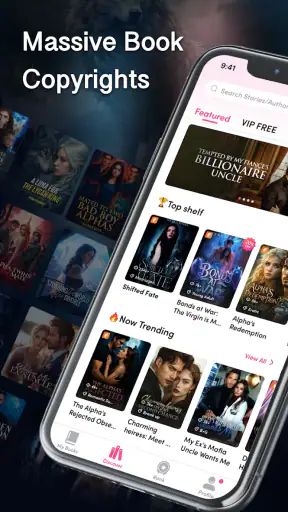

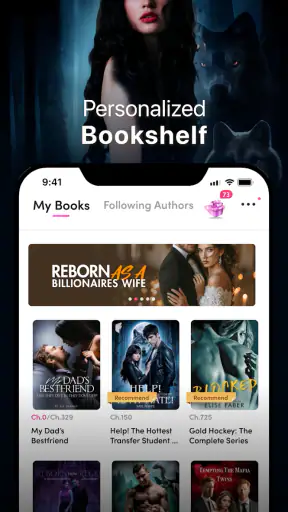
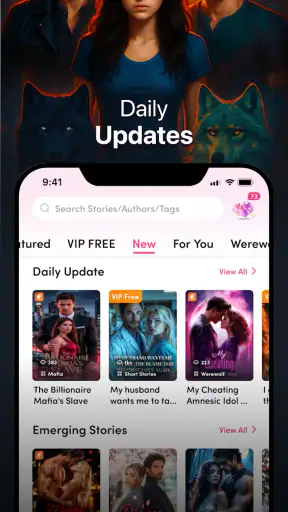

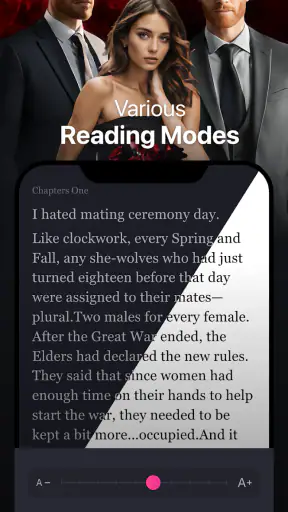
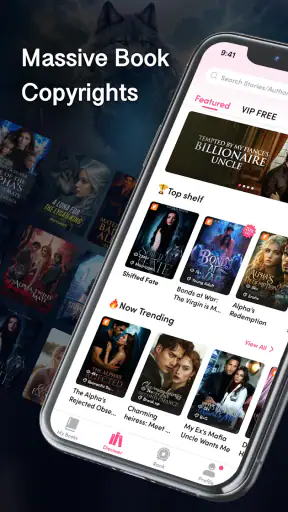

I approached My Fiction: Stories & Novels as a reading app rather than as a replacement for a traditional ebook library. That distinction matters. Its appeal is immediate: instead of deciding which single book to buy or download, I could browse fiction by mood and move between different kinds of stories. For readers who enjoy sampling genres, that low-commitment start is the strongest reason to try it.
The app comes from Maple House and sits in the Books & Reference category. It is free to install, carries a Mature 17+ age rating, and has passed the one-million-install mark. Those details give a useful picture of its audience: this is aimed at adults looking for accessible digital fiction, not children’s reading or a formal reference tool.
My first impression was positive, but not unconditional. The large selection creates curiosity, while the average rating of 3.4 from roughly twenty-three thousand ratings suggests that the experience is uneven for a meaningful part of its audience. I found it easiest to enjoy when I treated it as a discovery shelf: open it with a little time, find something promising, and decide whether it deserves a regular place in my reading routine.
What the first week feels like
A quick route from boredom to a story
The first-week appeal comes from variety. A conventional ebook app usually works best when I already know what I want: a particular title, author, or format. My Fiction is more useful when I only know that I want to read something. That makes it a good companion for short breaks, late-night browsing, or the awkward few minutes when a long book feels like too much effort.
I would not describe the opening experience as the same as entering a carefully curated bookstore. It feels more like walking through a broad fiction shelf and deciding what catches my attention. That can be liberating, especially for readers who like romance one day, suspense the next, and something darker or more dramatic after that. It can also create decision fatigue. The more choices appear, the more important it becomes to stop browsing and actually begin a story.
My practical advice is to choose a simple rule during the first session: give one story a fair start, then keep only a small mental shortlist of alternatives. Constantly switching between titles makes the app feel busier than it needs to be. The value is in reading, not in collecting possibilities.
Why the free entry point helps
Because the app is free, trying it requires less commitment than purchasing several books to test unfamiliar genres. That is especially useful for readers who are still working out their preferences or who enjoy discovering less familiar fiction. I could approach a title with curiosity rather than worrying that a disappointing choice had wasted the cost of a purchase.
Free access does not automatically mean friction-free access. My Fiction includes in-app purchases ranging from $0.49 to $199.99 per item, so I would pay close attention to any purchase prompt and avoid tapping through quickly when I only intend to browse. The broad range is important: the app can be sampled without paying, but readers should still keep control of their spending habits.
This is one place where the app differs from a paid ebook store. With a store, the price is usually clear before I commit to a title. Here, I would make a habit of checking what is included in the reading experience and what may involve a purchase before settling into a long session. That small pause prevents the free starting point from becoming an accidental spending path.
A realistic everyday use
Imagine finishing work with twenty minutes before dinner. I might not want to begin a four-hundred-page novel, but I may still want a story to break up the day. This is where the app makes sense. I can open it, browse a genre that matches my mood, read for a while, and stop without feeling that I have abandoned a carefully planned reading project.
The same pattern works during travel or while waiting for an appointment, provided the reading experience suits the connection and device conditions available at that moment. I would not build an important trip around it without testing my preferred reading routine beforehand. A reading app earns trust through reliability over repeated sessions, not through a promising first browse.
Whether it earns a place after the novelty
The month-to-month question
After the first week, variety alone is no longer enough. The real test is whether I can return to My Fiction and find something worth reading without repeating the same search. That depends on how actively I use its discovery approach. If I open it only to scroll, the novelty fades quickly. If I use it to explore a particular mood or genre and commit to promising stories, it has a better chance of becoming a regular reading habit.
I see the app as strongest for readers with flexible tastes. Someone who enjoys moving between fiction styles may get recurring value from the broad shelf. Someone who wants one specific bestseller, a dependable author catalogue, or a carefully organized personal library may find a dedicated ebook service more satisfying. The difference is not simply the number of stories; it is the amount of control and certainty the reader expects.
A useful monthly routine would be to choose one main reading lane and one experimental lane. For example, I might keep returning to familiar suspense while allowing a second slot for a genre I rarely try. This prevents the app from becoming an endless stream of random choices and turns its range into a deliberate discovery tool.
How I would manage a growing reading queue
The hidden challenge in a broad fiction app is not finding a title. It is remembering why a title seemed interesting after several browsing sessions. I would avoid keeping a huge list of “maybe later” stories. A short queue is more useful because it forces a decision: start the story, remove it, or leave it for a specific mood.
I would also separate unfinished stories from stories I genuinely want to continue. Those are not the same thing. A title may be fine but poorly suited to the time I have available, while another may be a true long-term choice. Treating every unfinished item as a commitment creates unnecessary pressure and makes returning to the app feel like housekeeping.
This is one of the app’s trade-offs compared with a conventional library manager. A traditional library often encourages cataloguing, ownership, and orderly retrieval. My Fiction is more naturally used for browsing and sampling. That is convenient at the beginning, but readers who enjoy detailed organization may eventually want a more structured alternative alongside it.
Who benefits most from continued use
I would recommend continued use to three kinds of readers. First are genre explorers who like discovering stories outside their usual habits. Second are casual readers who want fiction available in small, flexible sessions rather than a formal reading plan. Third are people who dislike paying for every experiment and prefer to test their interest before making a purchase.
I would be more cautious for readers who need a highly predictable catalogue, strong ownership features, or a distraction-free environment. If your ideal reading session begins with a known book and ends with carefully managed notes, bookmarks, and shelves, a specialized ebook reader may be a better home. My Fiction is more about access to possibilities than about building a perfect personal archive.
Maintenance: what the app asks from me
The maintenance burden is moderate, but it is mostly mental rather than technical. The app does not become useful simply because it is installed. I need to keep my reading choices under control, notice which stories actually hold my attention, and resist confusing frequent browsing with meaningful reading.
The current version is 3.2.62, and the app supports Android 7.0 or later. That makes it approachable for people using older Android devices, although I would still judge the experience on the particular phone or tablet I use most. Reading comfort depends heavily on screen size, brightness, text presentation, and how easily I can settle into a session. A technically supported device is not automatically the most comfortable one.
My maintenance routine would be simple: check the app when I want a story, keep a small shortlist, and remove titles that no longer interest me. I would also review purchase prompts with care and avoid opening the app when I am only looking for a quick distraction but have no intention of reading. That sounds minor, yet it is the difference between a useful reading habit and another source of screen clutter.
Where fatigue begins
The first source of fatigue is choice overload. A large fiction selection sounds ideal, but endless browsing can replace the activity it is supposed to support. Readers who already struggle to choose what to watch or read may find the range energizing at first and tiring later.
The second is uneven commitment. Sampling many stories is enjoyable, but abandoning too many can make the app feel shallow even when the available fiction is not the problem. I found that setting a short trial period for a story worked better than judging it from the opening screen. At the same time, I would not force myself through a title simply because I had already spent time finding it.
The third is the tension between free access and paid options. The app is easy to try, but a reader who wants a completely predictable cost structure may prefer a service with a single subscription or straightforward individual purchases. My Fiction suits experimentation better than strict budgeting unless I actively monitor each decision.
There is also a maturity consideration. Since the content rating is Mature 17+, I would not install it for a younger reader or assume that every story suits a family reading environment. Adults should still choose titles according to their own comfort level. The age rating is a useful boundary, not a promise that every story will match one particular taste.
How it compares with familiar alternatives
Compared with a standard ebook store, My Fiction is more attractive when discovery matters more than ownership. I would open an ebook store when I know the exact title I want, when I want to buy a book permanently, or when I care about a polished library of selected purchases. I would open this app when I want to browse across genres and test a reading direction without making that decision first.
Compared with a subscription reading service, the main question is cost clarity and catalogue confidence. A subscription can feel easier for readers who want one regular payment and a stable reading routine. My Fiction’s free entry point is better for low-commitment exploration, but the presence of item-level in-app purchases means I would not assume that every desirable path has the same financial shape.
Compared with a dedicated reading app, it is less compelling for readers who prioritize advanced personal organization. A dedicated reader may be preferable for a large owned collection, careful progress tracking, or a quiet interface built around one book at a time. My Fiction earns its place through breadth and spontaneity, not through being the most disciplined tool for long-term library management.
Questions I would answer before installing
Is it worth trying if I read only occasionally? Yes, especially if your reading sessions are irregular and you enjoy choosing by mood. The free starting point lowers the risk of testing it. I would not expect it to transform occasional reading into a habit by itself, though; the habit still depends on whether you find stories that make returning worthwhile.
Is it suitable for a serious reader? It can be, but only if “serious” means reading widely and consistently rather than managing a precise catalogue. A dedicated ebook platform is likely better for readers who already know their preferred authors and want dependable ownership or organization.
How can I avoid spending more than intended? Treat every purchase prompt as a separate decision. Do not assume that free installation means every reading route is free, and keep your shortlist focused so that browsing does not turn into impulsive tapping. The listed purchase range makes this a sensible precaution rather than an overreaction.
Will it work on an older Android phone? The minimum requirement is Android 7.0, so the app is not limited to only recent Android versions. Still, I would test reading comfort on the device I plan to use, particularly if I rely on a smaller screen or read for long periods.
Who should skip it? I would skip it if I want a single known book, a tightly controlled family reading environment, or a library-first experience with minimal discovery. I would also look elsewhere if unpredictable purchase choices would make me uncomfortable. In those cases, a conventional ebook store or a clearly priced reading subscription is the more natural fit.
My long-term verdict
My Fiction: Stories & Novels earns lasting space for me only when I use it intentionally. Its first-week strength is obvious: it makes fiction discovery easy and gives curious readers a low-commitment way to explore. Its month-to-month value is more selective. The app works best as a flexible source of new reading, not as the sole solution for every kind of digital book ownership.
Maple House has made something that can fit naturally into short reading windows, but the reader has to supply the discipline. Keep the queue small, choose by mood instead of scrolling without purpose, and watch purchase prompts carefully. Those habits reduce the main sources of fatigue and make the free access more useful.
With an average rating of 3.4 and more than a million installs, the app clearly has a substantial audience, but it is not a universal recommendation. My honest view is that its lasting value comes from guided discovery, not endless browsing. I would recommend trying it to adults who like variety, enjoy sampling fiction, and are comfortable deciding for themselves which stories deserve time. I would point more structured readers toward a dedicated ebook alternative.
In the end, I would keep it installed as a secondary reading option rather than make it my only library. When I want a familiar author or a carefully owned collection, I would use another service. When I want to open a broad fiction shelf and see what mood takes me, this app has a clear and useful role.


